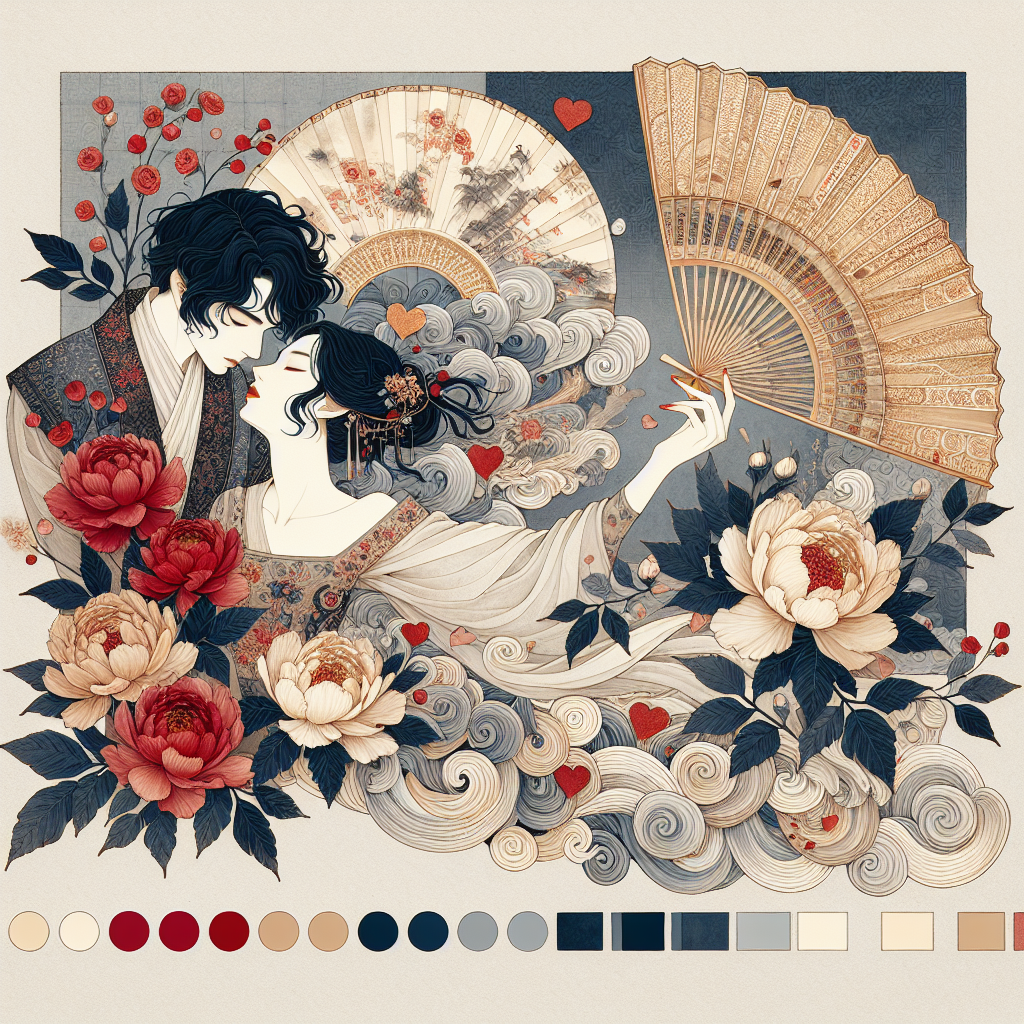
“Dear, I fear we’re facing a problem…”
‘Lovefool’ by The Cardigans
“In the pursuit of knowledge, every day something is added. In the practice of the Dao, every day something is dropped.”
Laozi, “Dao De Jing”
“Dear, I fear we’re facing a problem…” croons the unmistakable voice of Nina Persson in The Cardigans’ hit “Lovefool.” It’s a plea wrapped in a catchy tune, a request for affection almost too earnest to bear. Isn’t it curious how a 90s pop song can echo the ancient echoes of Laozi’s “Dao De Jing,” where it is written “In the pursuit of knowledge, every day something is added. In the practice of the Dao, every day something is dropped.” Much like the tune’s narrator, we are often caught in the cycle of yearning for acceptance and love, adding layers of longing, when perhaps the Daoist approach is to drop the complexities and return to simplicity, to the uncarved block. Let’s dive into the dance of Dao and ’90s pop, where we discover the hidden harmony in seeking love, the Daoist way.
“Say That You Love Me” – Desiring Acceptance
“Love me, love me, say that you love me…” The chorus of “Lovefool” captures the human desire for acceptance and recognition. This craving is not foreign to Daoism, where the importance of being in harmony with oneself and others is emphasized. Yet, Daoism would gently remind us that obsession over others’ perceptions leads us astray from our path. Laozi suggested a paradoxical truth: to be truly loved and accepted, one must first be free from the need for it. The less we chase after the approval of others, the more effortlessly it comes to us. Like water, which nourishes all things without trying, genuine acceptance is often found in the art of not seeking.
In the pursuit of love, we sometimes mirror “Lovefool’s” protagonist, donning masks and personas in hopes of winning affection. But in Daoism, authenticity is key – the “Dao De Jing” espouses the virtue of Ziran, or naturalness. By being true to our nature, we align with the Dao. Acting not out of desperation, but from our genuine self, we invite a connection that’s rooted in truth rather than performance. It’s not about manipulation or coercing a confession of love; it’s about being so genuinely you that love can’t help but gravitate towards your authenticity.
And yet, there’s a certain beauty in the raw vulnerability expressed in “Lovefool.” It’s a testament to the human experience, a chapter in the story that we all share. Daoism doesn’t ask us to suppress our emotions but to observe them with a calm detachment. By understanding the transient nature of our desires, we gain perspective. We learn to desire acceptance without being controlled by that desire, to love without attachment, thereby embodying the freedom that Daoist philosophy cherishes.
Wu-Wei in Romance: Effortless Bonding
The concept of Wu-Wei, or “non-action,” suggests that the best way to approach life is by going with the flow, rather than against it. In romance, this can be translated to mean that the most profound connections form not from forceful effort, but from a harmonious dance of energies. “Lovefool” might have us believe we must beg and plead for love, but Daoism would advise otherwise. Love, like everything else in life, flourishes best when it is given the freedom to grow naturally, without the constraints of expectation or the force of will.
In relationships, Wu-Wei encourages us to let go of the script and the strategies. It’s the difference between trying to script every moment with someone and simply enjoying their presence, allowing the relationship to evolve at its own pace. This doesn’t mean passivity; rather, it’s active engagement without attachment to outcome. We invest ourselves fully in the moment with our partner, but we do not cling to any particular path the relationship must take. We trust in the Dao, in the natural unfolding of our shared journey.
This practice of Wu-Wei in love also means understanding timing – that sometimes, despite our desires, the moment isn’t right. “Lovefool” implores, “Fool me, fool me, go on and fool me,” but the Daoist would say there’s no need for deceit when you trust in the ebb and flow of life’s timing. If love is meant for you, it will come when you are both ready, without manipulation or games. It’s about knowing when to act and when to step back, letting the natural course of relationship take the lead.
The Unseen Rhythms of the Heartstrings
In the throes of passion, as expressed in the earnest yearnings of “Lovefool,” we are often blind to the unseen rhythms that guide our connections with others. Just as the “I Ching” speaks of the subtle movements of the Dao manifesting in the world, so too do the rhythms of our hearts follow patterns beyond our immediate perception. These invisible threads weave through our interactions, silently dictating the dance of attraction and affection.
The Daoist observes these rhythms with a quiet mind, understanding that love’s true nature is akin to a melody played in the heart – it cannot be forced, only discovered. As “Lovefool” laments unrequited love, it’s worth pondering if the song’s narrative would shift if the protagonist embraced the idea that the rhythms of love need not be chased, but rather, welcomed with a receptive spirit. The moment we stop trying to control the music is the moment we truly begin to hear it.
Finally, it’s important to acknowledge that the heart’s rhythms are cyclical, much like the Daoist belief in the cyclical nature of life. There are times to love openly and times to retreat and heal. “Lovefool” captures a moment of longing, but Daoism teaches us that this is just one part of a larger cycle. Just as seasons change and the Dao flows, our capacity for love waxes and wanes. Embracing this cycle means knowing when to hold on to love and when to let it transform into something new, trusting that the Dao will guide us through each transition.
As we bid adieu to our musings on “Lovefool” and Daoist love, we’re reminded of the gentle wisdom that winds through the ’90s pop hit and ancient philosophy alike. The longing in the song is universal, a siren’s call to all who’ve ever sought love. Yet, through the lens of Daoism, we find a deeper tranquility, a trust in the ebb and flow of life’s relationships. Whether we’re caught in the throes of romance or reflecting on the patterns of our heartstrings, the Dao offers a harmonious soundtrack to our emotional journeys. Herein lies the dance of the 90s and the eternal Dao – a choreography that teaches us to love with ease, authenticity, and a deep connection to the natural world. So let’s tune our hearts to these ancient rhythms, and perhaps we’ll find that we’re not such “lovefools” after all.
Leave a Reply